
Cooking Oils Decoded: What Changes When You Heat Them
From olive oil to avocado oil, understand how heat affects nutritional value and which oils suit different cooking methods.
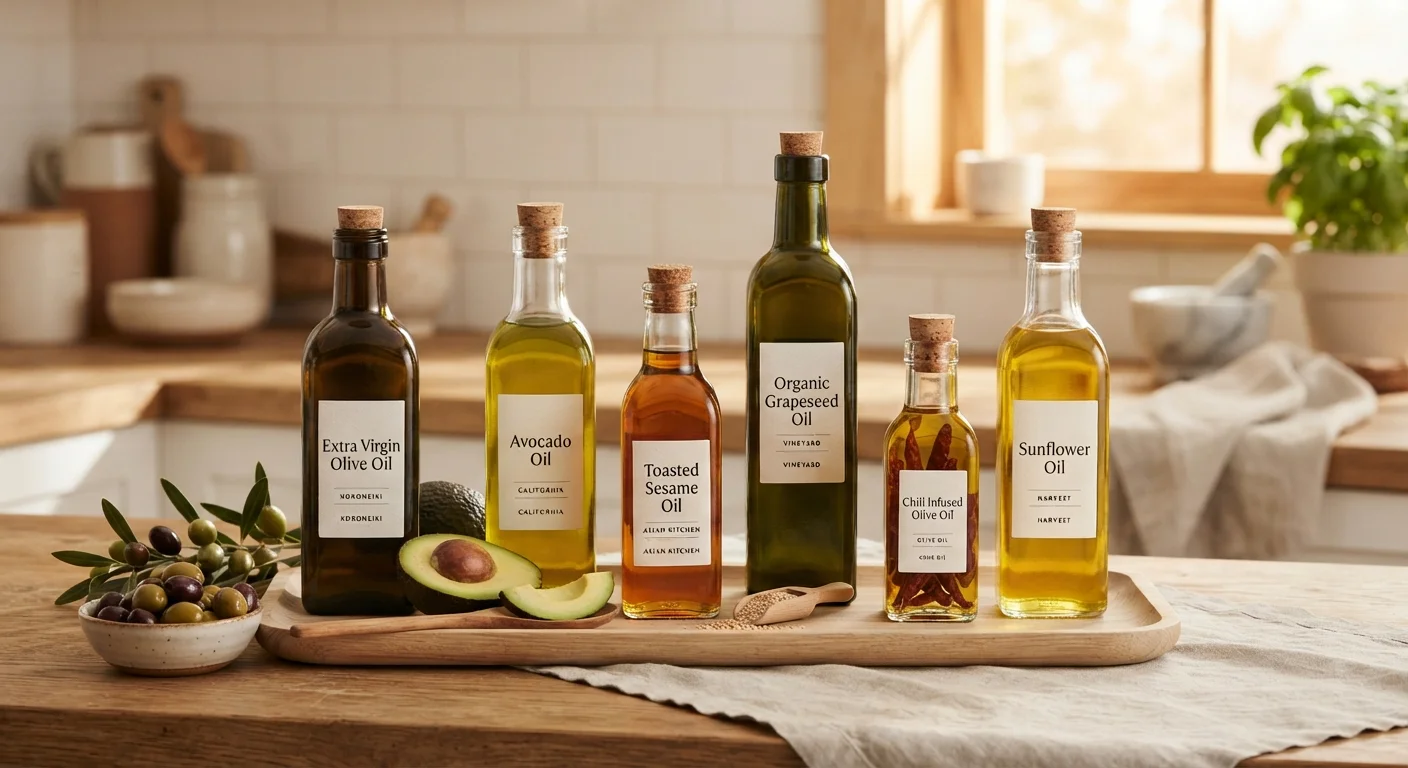
Photo: seetrueworth.net editorial
—— In This Article
Key Takeaways
- Every cooking oil has a smoke point; cooking above it degrades the oil's quality and taste.
- Refined oils generally have higher smoke points than unrefined or cold-pressed versions of the same oil.
- Monounsaturated fats (found in olive and avocado oils) are more stable under moderate heat than polyunsaturated fats.
- Extra virgin olive oil is suitable for most home cooking despite the widespread belief that it cannot handle heat.
- Storing oils in cool, dark conditions slows oxidation and preserves nutritional value.
- No single oil is ideal for every purpose; keeping two or three on hand covers most cooking needs.
Why heat changes what's in your oil
Cooking oils are not chemically inert. When you apply heat, the fats in an oil begin to change structure. Below an oil's smoke point, these changes are mostly minor. Above it, the oil starts to break down into compounds that affect flavor, aroma, and the presence of potentially harmful byproducts.
The stability of a fat under heat depends largely on its chemical structure. Saturated fats, found in coconut oil and ghee, are the most stable because their carbon chains have no double bonds to react with oxygen. Monounsaturated fats, with one double bond, are moderately stable. Polyunsaturated fats, with two or more double bonds, are the most reactive and degrade more readily at cooking temperatures.
This matters in practice: an oil like flaxseed oil, which is very high in polyunsaturated fats, is well suited to cold uses (salad dressings, drizzling) but inappropriate for cooking. Avocado oil, high in monounsaturates and with a smoke point above 480 degrees Fahrenheit in its refined form, can handle searing and stir-frying.
A simple way to avoid overheating oil
Add a small drop of water or a single piece of the food you are cooking to the pan before adding oil. If the pan is too hot, you will know before the oil starts to smoke. Starting with a pre-heated pan at medium heat and adjusting from there gives you more control than turning the burner to maximum from the start.
Common oils and how they behave under heat
Extra virgin olive oil is perhaps the most misunderstood. Its smoke point of roughly 375-405 degrees Fahrenheit is sufficient for sauteing vegetables, pan sauces, and oven roasting at standard temperatures. The polyphenols that give it flavor and antioxidant properties do diminish with prolonged high heat, but short cooking times preserve much of them. Light or refined olive oil, with less flavor but a higher smoke point, works better for longer, hotter applications.
Avocado oil (refined) tolerates very high heat and has a neutral flavor, making it a practical choice when you need high-heat cooking without adding flavor to the dish.
Canola oil (refined) has a moderate-to-high smoke point and a favorable fat profile that includes both monounsaturated and omega-3 polyunsaturated fats. It is widely used for everyday cooking where a neutral flavor is preferred.
Coconut oil is high in saturated fat, which makes it heat-stable, but its smoke point is moderate (around 350 degrees Fahrenheit for unrefined). It adds a distinct flavor that suits some dishes and not others.
Butter and ghee are not plant oils but are commonly used in cooking. Ghee (clarified butter with milk solids removed) has a higher smoke point than whole butter and is more stable at medium-high heat.
375-405°F
Smoke point range for extra virgin olive oil
This range covers most everyday home cooking methods, including sauteing and standard oven roasting.
480°F+
Smoke point of refined avocado oil
Refined avocado oil is among the highest smoke-point plant oils available for general cooking use.
73%
Monounsaturated fat content of olive oil
According to USDA FoodData Central, olive oil is composed of approximately 73% oleic acid (monounsaturated fat).
Matching oils to cooking methods
A practical approach is to sort oils into two categories: those for heat and those for finishing.
For high-heat methods (searing, deep frying, high-temperature roasting), refined oils with smoke points above 400 degrees Fahrenheit are appropriate. Refined avocado oil, refined peanut oil, and refined sunflower oil all fit this range.
For medium-heat cooking (sauteing, scrambled eggs, most stovetop dishes), extra virgin olive oil, coconut oil, and whole butter work well, provided you are not pushing temperatures to maximum.
For finishing and cold uses (drizzling over finished dishes, whisking into vinaigrettes, blending into dips), unrefined oils with more fragile flavor compounds shine. Extra virgin olive oil, walnut oil, and sesame oil all contribute distinct flavors that heat would diminish.
Eating patterns such as the Mediterranean diet rely heavily on olive oil across cooking methods, and the evidence behind such patterns is well established. You can read more in our comparison of Mediterranean, DASH, and whole food dietary patterns.
This article is for general informational and educational purposes only and is not medical or dietary advice. Consult a registered dietitian or healthcare provider for guidance tailored to your individual health needs.
Frequently Asked Questions

Nutrition Editorial Team
Nutrition Editorial Team is the collective byline for our editorial team and contributor network. Articles published under this byline or an editorial pen name are researched, written, and reviewed according to our editorial standards for clarity, consistency, and independence before publication.
View author profile